
How Municipal Court Warrants Work
Municipal courts in Cheatham County handle city ordinance and traffic cases. Miss a date, and further process may follow. Only the judge can confirm what was ordered. A city court paper is not a county warrant. The Sheriff's site is no shared city-court database. Each of the four cities keeps its own clerk, calendar, and phone line. Read the citation, ask the clerk whether a warrant issued or a new date was set, and take any General Sessions matter straight to the county court.
Municipal Courts Across Cheatham County
Cheatham County's four incorporated cities post separate court contacts. No city offers a public warrant lookup. Each clerk route below can change, so confirm the date before you drive over.
| City | Municipal court route | Published schedule | Contact |
|---|---|---|---|
| Ashland City | Municipal Court, 405 N Main | First Thursday traffic sessions | (615) 792-5719 |
| Pleasant View | City Hall Court Room, 1008 Civic Court | First Thursday, 3 p.m. | (615) 746-0600, ext. 101 |
| Kingston Springs | Audrey Beck Meeting Hall, 420 North Main | Second Tuesday, 4:30 p.m. | (615) 952-2110, ext. 4 |
| Pegram | Town Hall, 308 Hwy 70 East/Lakeview Drive | Third Thursday at 3 p.m., as needed | (615) 646-0773 |
A city fee table is not a warrant list. Ask the clerk in Cheatham County what the case status means and what action the court requires next.
Cheatham County Municipal Warrant Checks
No Cheatham County city posts a warrant roster, a name search, or a shared portal. Ashland City's police records page separates municipal citations from General Sessions traffic. That page helps when a citation shows a city name but the issuing court is unclear. It points you to the right clerk. Give the clerk the city, date, and citation number. Add the case number and record type. For a county criminal warrant with no known issuing court, use the Sheriff's in-person ID instruction. A municipal clerk cannot confirm that file.
Cheatham County Municipal Warrants: Ashland City
Ashland City Municipal Court lists its own judge, clerk, and traffic schedule. The city's police records page sends municipal-citation questions there. Traffic citations from the Sheriff or the Tennessee Highway Patrol on the General Sessions docket go to the Cheatham County clerk instead. City Hall, police records, and the court counter differ. The city court takes cash, money orders, and cards, but not personal checks. It publishes a municipal fee schedule and city-copy charges. Those figures are not Cheatham County criminal bond amounts. Ask the clerk whether you must still appear after paying. The court's own page posts the current local schedule and the payment route, so review Ashland City Municipal Court information before you call.
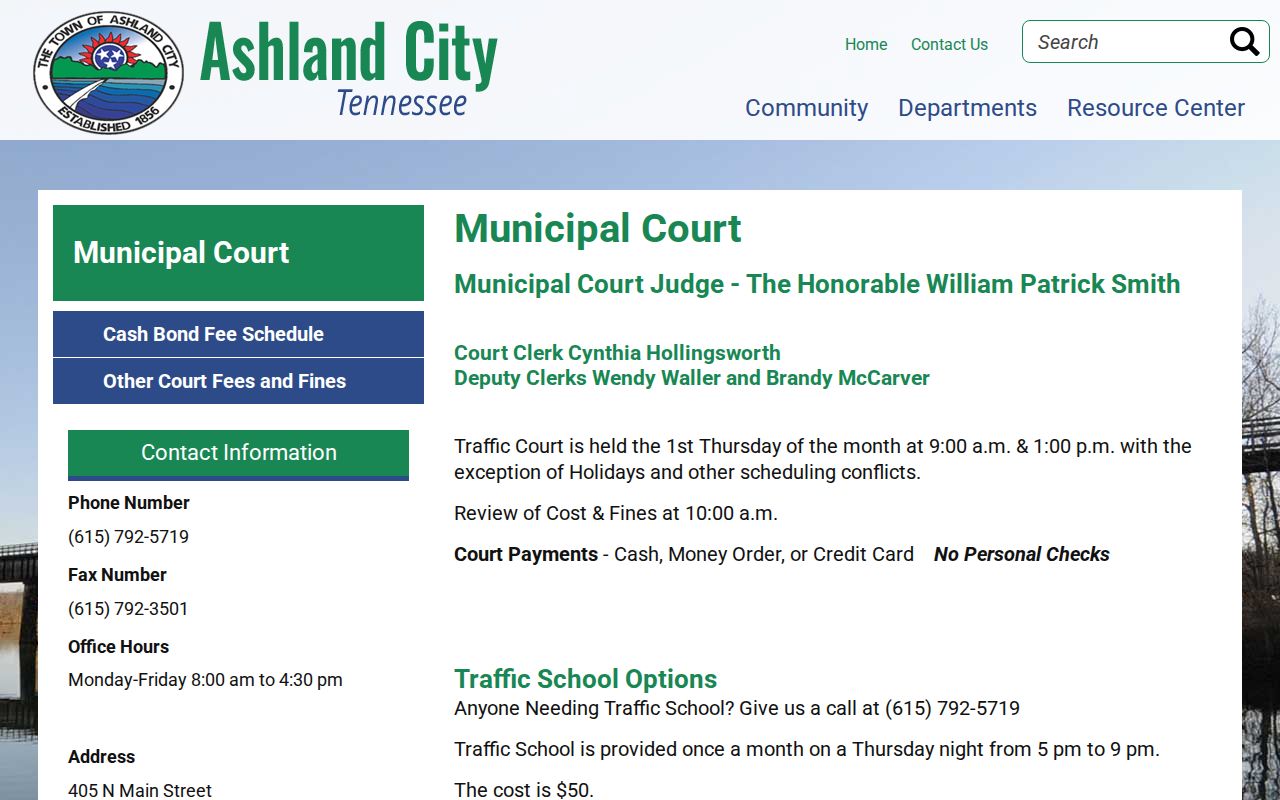
Confirm the current session before going; the city page notes holiday and schedule changes.
Cheatham County Municipal Warrants: Kingston Springs
Kingston Springs, in Cheatham County, runs its Municipal Court for local ordinances and minor traffic citations. Court questions go to kreed@kingstonsprings-tn.gov. You can also call (615) 952-2110, extension 4. Sessions meet on the second Tuesday of each month at 4:30 p.m. in Audrey Beck Meeting Hall. The city's Citisen link is a payment route, not a public warrant database. Follow the clerk's instructions before paying. For a personal case, email the citation number and date, and leave payment-card details out of a routine message. Ask the clerk to confirm any new date afterward. Public Safety lists a Spring Street address and notes its work with the Cheatham County Sheriff. Still, not every municipal record appears on the Sheriff site.
Municipal Warrants: What They Show
A city citation, a bench warrant, a county arrest warrant, and a civil warrant are different papers. Municipal process covers local cases. General Sessions civil warrants handle claims and other civil matters. A criminal arrest warrant follows a separate complaint and probable-cause route.
| City citation | Use the municipal clerk named on the paper. |
|---|---|
| Missed city setting | Ask that city court whether it issued further process. |
| General Sessions traffic | Contact the county traffic clerk for the docket and next step. |
| County criminal concern | Follow the Sheriff’s in-person verification instruction. |
| Civil warrant or detainer | Use General Sessions civil records and filing guidance. |
Ask the clerk to name the process by its official title. In Cheatham County, "city warrant" does not mean the same thing at every court.
Cheatham County Municipal Warrants: Pegram
Pegram posts no standalone police warrant portal. Town Hall answers at (615) 646-0773 and cityhall@pegram.net. Its hours run Monday through Friday, split around noon. The municipal bulletin lists court on the third Thursday at 3 p.m., held as needed rather than every month. Pegram's Town Leaders page names the Cheatham County Sheriff as the town's enforcement arm. That does not put each municipal docket on the Cheatham County Sheriff's site. For a local citation, ask Town Hall which court file and date apply. Use the Sheriff's in-person ID route for criminal matters. The charter holds court-cost language, not a fee schedule. Ask Town Hall before relying on any amount.
Cheatham County Municipal Warrants: Pleasant View
Pleasant View sits inside Cheatham County, and its Municipal Court is the office that would handle any municipal warrant tied to the town. The court meets at City Hall Court Room, 1008 Civic Court, on the first Thursday at 3 p.m. The clerk answers at extension 101 and by email at deputyclerk@townofpleasantview.com. Police non-emergency calls run through extension 105. Neither line is set up as a warrant-status desk, so treat both as general contacts rather than a warrant lookup. The Deputy Clerk handles public and police reports and hands out a city records form. That form asks for the record type, a date range, the subject or key words, inspection or a copy, how you want it delivered, and your estimate choice. Its TPRA note states that inspection-only needs no written request or fee. A court record can still carry its own access limits. If you want a copy, request a non-exempt record and expect redaction. A police report is not a court docket, and the city form is not a warrant check.
Clearing a Municipal Court Warrant
Paying a fine, finishing traffic school, getting a new court date, and having a judge recall the warrant are four separate steps. Ashland City offers a local traffic-school option. Kingston Springs routes certain payments through a city link. Neither city says those steps cancel a municipal warrant on their own. Call the issuing clerk in Cheatham County, ask what the court has actually entered, and keep any receipt or written notice you receive.
Do not pay a caller who claims a municipal warrant can be removed at once. Hang up and contact the official clerk through a number you find independently.
If the missed date was serious, talk to a Tennessee attorney before you appear. A Cheatham County clerk can walk you through the process, but it cannot shape your legal strategy.
Cheatham County Municipal Warrant Access
Tennessee access law governs municipal and county records in Cheatham County. Public access has limits. Rule 34, juvenile confidentiality, sealing orders, and redaction rules can all keep parts of a court file closed. Ask the city clerk how to request a non-exempt record and which details are withheld.
Record access:
Tennessee Public Records Act, T.C.A. §10-7-503, addresses access to public records held by government offices.
Tennessee Supreme Court Rule 34 governs public court-record access subject to its exceptions.
T.C.A. §37-1-153 protects juvenile records except for access allowed by law.
A clerk can point you to the right office or form. It cannot tell you whether to file a motion or predict how the court will rule on your warrant.